
Robbinsdale’s Graeser Park Added to National Register of Historic Places
A rest stop in Robbinsdale known for its historic “beehive” fireplace has been added to the National Register of Historic Places, according to Minnesota Department of Transportation (MnDOT) and city officials.
The Graeser Park roadside parking area, located at 4400 Lakeland Ave. N. off Highway 100, underwent years of restoration after falling into disrepair.
The park was built during the Great Depression in the late 1930s and funded by the former Works Progress Administration. A variety of organizations and volunteers worked to restore the park following reconstruction of Highway 100.
“When I first saw Graeser in 2020, I was immediately struck by its potential,” said Andrea Weber, manager of MnDOT’s Historic Roadside Properties and Waysides program. “It was not razed, as my project files stated, and I knew we could do a lot to improve it.”
The distinctive beehive fireplace is the only one of its kind still standing where it was originally built. The fireplace is constructed out of hand-cut limestone quarried out of the Minnesota River near the Mendota Bridge. The park also includes stone picnic tables and benches constructed from salvaged and new materials. Repairs were also made to the park’s rock garden pond walls.
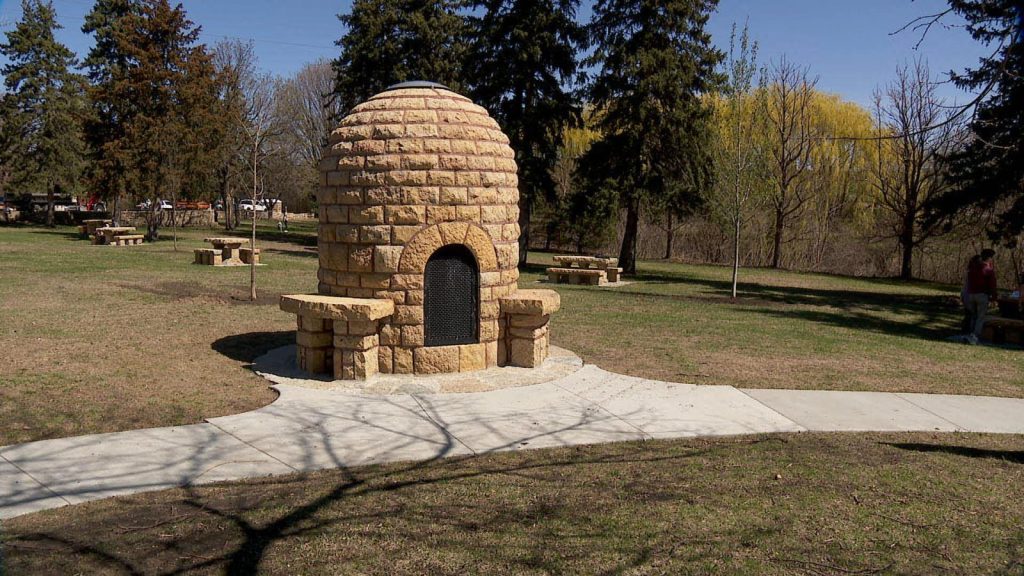
Iconic beehive fireplace at Graeser Park
‘Minnesota’s First Freeway’
The historic rest stop was designed by Carl Graeser, for whom the park is named. The park was a prominent feature of Highway 100 construction between what is between what is now County Road 81 in Robbinsdale and 78th Street in Edina. Highway 100 was considered “Minnesota’s first freeway” and often referred to as “Lilac Way,” due to the lilacs featured in the landscaping at the time.
Restoration of the park began in 2020. A final phase of restoration will take place this summer.
Once complete, ownership of the property will be transferred from MnDOT to the city of Robbinsdale.
“The city of Robbinsdale has been a great partner with MnDOT, maintaining the park since 1940,” said Weber. “The city has always seen this wayside as a public green space, and it has been used for community events for decades. By conveying it, the park can continue to be used this way.”
Related: Volunteers Work To Restore Graeser Park to Its Historic Glory