
Can Do Canines Celebrates 1,000th Assistance Dog Team
The New Hope nonprofit Can Do Canines is celebrating 1,000 assistance dog teams since it started its mission in 1989.
The nonprofit raises and trains dogs to help people with a range of needs. It started with training hearing assist dogs, but has since expanded to assist people with mobility, diabetes, seizure and autism.
Training assistance dogs can cost tens of thousands of dollars, but are provided to clients free of charge thanks to donors.
“Can Do Canines has really provided a lot of us with an opportunity to have something that is life-saving and life-changing that we normally wouldn’t be able to afford,” said Nikki Rosen, the 1000th client to receive an assistance animal.
Rosen got her dog, Pixie, as an assistant for her Type 1 diabetes. She was diagnosed in 2010. At first, she said that diagnosis was manageable. But it became tougher for her to detect her low blood sugar. Rosen recalled one time where her blood sugar dropped in a grocery store — despite her device recording it as normal.
“It was at that moment, I’m like: ‘I can’t live like this.’ This is dangerous. I need to have another solution,'” Rosen said.
Rosen applied for a diabetes assist dog to help with her hypoglycemia. Eighteen months later, she welcomed Pixie into her family.
“She is phenomenal. She can sense and smell my low blood sugars even before my medical equipment can,” Rosen said.
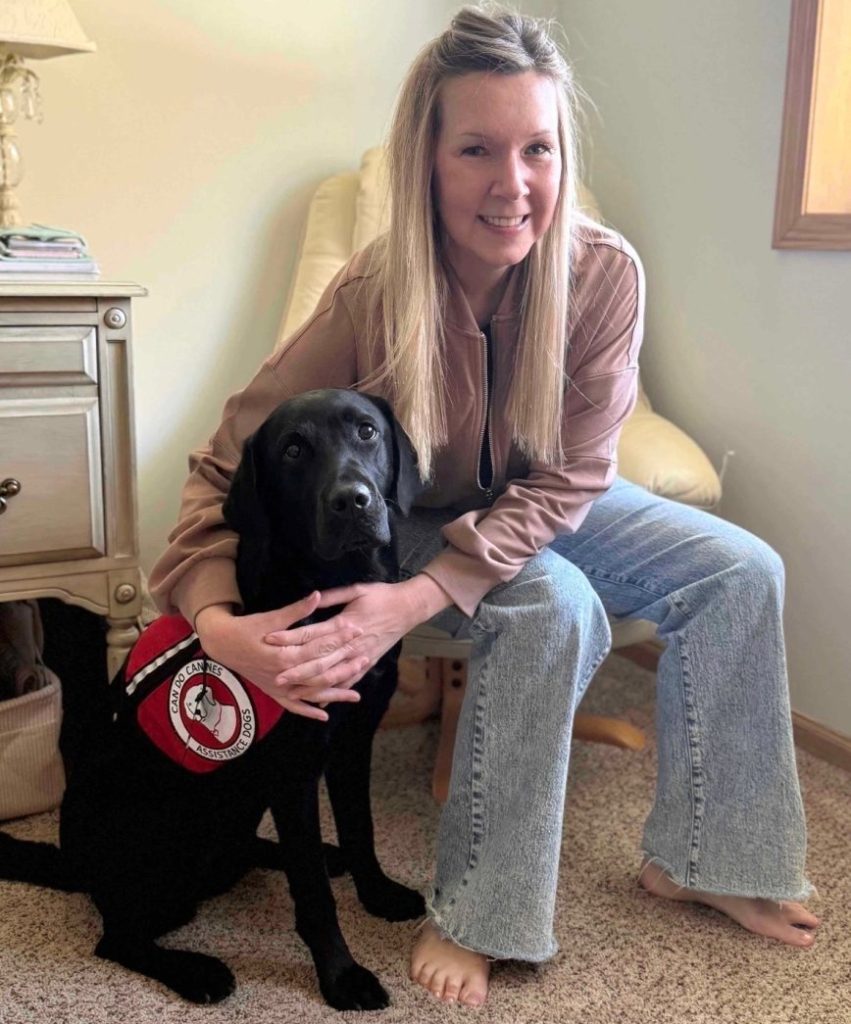
Rosen with her diabetes assist dog, Pixie.
Pixie is trained to alert Rosen when she can smell low blood sugar, which she said can beat the machine by 15 to 30 minutes. That’s a potentially lifesaving amount of time. The animal is also trained when prompted to grab Rosen’s medical bag, which carries test strips for low blood sugar and glucose tablets for when her blood sugar drops.
Pixie can also hit a help button to call Rosen’s loved ones if she commands her to do so.
“It’s made me have a lot of freedom. When I’m driving, when I’m sleeping, when I’m grocery shopping, that even if I don’t feel those low blood sugars, she’s going to notify me that something’s wrong,” Rosen said.
A Larger Impact
The partnership has been crucial for Rosen — just like it has been for hundreds of other client-canine pairs. Executive Director Jeff Johnson said the dogs transform people’s lives.
“The impact that one of these dogs has on an individual family, and sometimes a small community, is amazing. And when you multiply that by a thousand, it’s really hard to wrap your mind around that,” Johnson said. “I hear the stories every day.”
Can Do Canines is hoping to expand its reach even further in the future. It just announced the public phase of its capital campaign. The nonprofit is halfway to its goal of raising $10 million, funds that would facilitate a move and renovation in Golden Valley.
Johnson said POPP Communications donated its building in Golden Valley to the nonprofit, but Can Do Canines has to do the work to renovate it.
Can Do Canines certifies about 45-50 assistance dogs a year, but wants to grow those numbers even higher to 70 per year. Johnson said a new, larger building would help achieve that goal.
Those in Minnesota and Wisconsin with needs that require a specially trained dog can apply online.
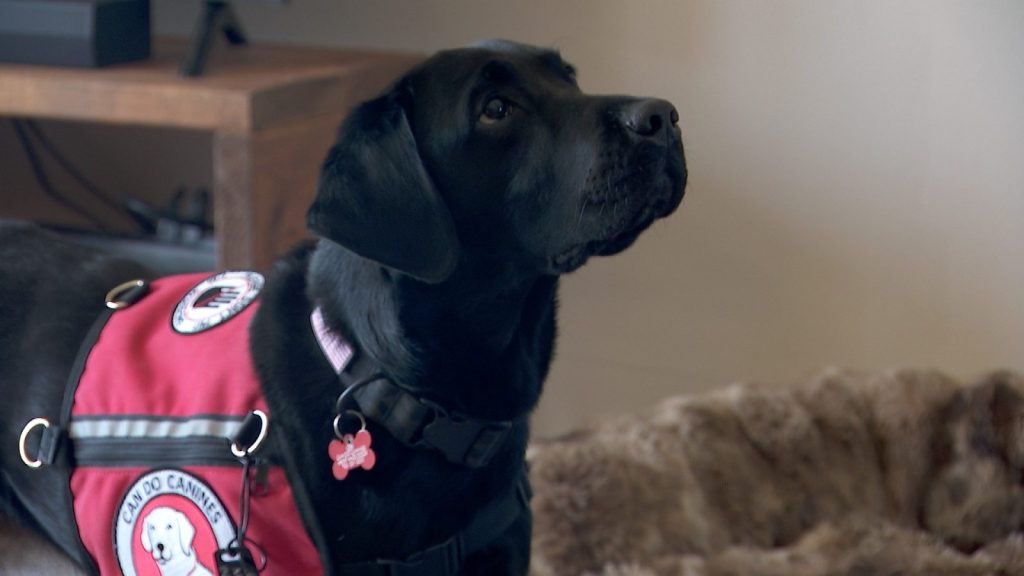
Pixie is very attentive to Rosen. She joined her family in November.

 CCX MEDIA
 NEWS
NEWS
 NEWS
NEWS
 SHOP/ORDER