
Solar Projects Face Uncertainty Amid Expiring Tax Cut
Whether it’s his garden or his rooftop, Nate Miller of Maple Grove likes to make the best use of his property. After having his roof replaced from a hail storm, his family decided that would also be a good time to install solar panels.
“We love maximizing our space, you know,” Miller said. “Planting trees, and shrubs, and flowers in the yard.”
Installing solar in 2024 was just another part of that. He said it made for a much lower electric bill, even with his family of four keeping all their normal habits.
“Went from a couple hundred dollars a month, especially in those peak months of the summer, to almost nothing,” Miller said.
Of course, that doesn’t mean the solar bill is free — there’s a payoff period for the panels.
But a 30 percent federal tax credit made that easier for Miller’s family. It cut the time it would take them to pay for the panels in half.
“I suppose we could’ve made it happen, but when the payoff period is closer to 20 years than it is to 10 years, that would’ve made the decision more difficult,” Miller said.
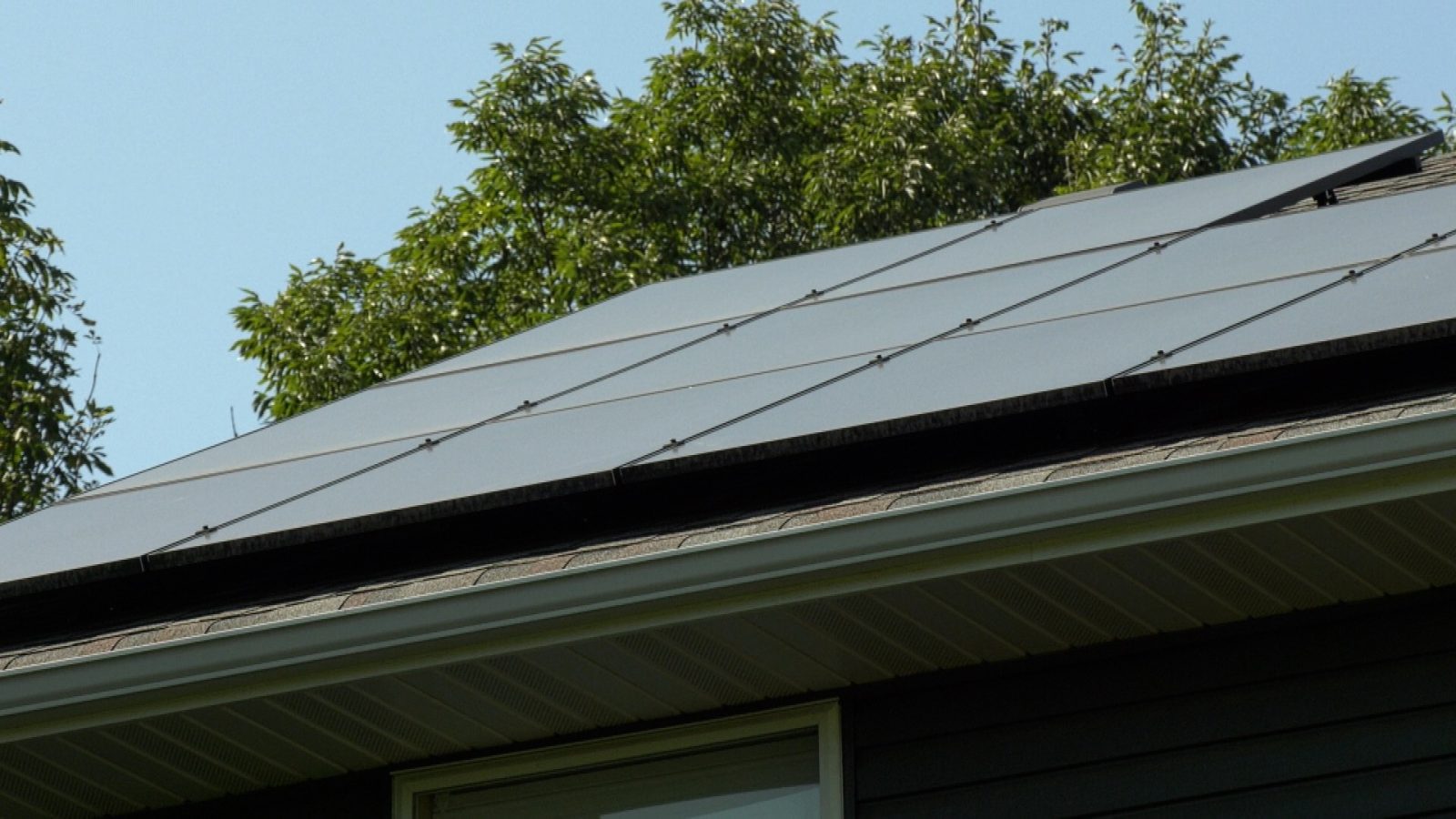
Nate Miller’s family installed panels on their roof in 2024.
No More Tax Credit
After 2025, there will be less incentive for homeowners to do solar energy projects. As a part of President Trump’s “Big Beautiful Bill,” the 30 percent federal tax credit that families receive for installing solar is expiring on December 31.
Miller and his family worked with the Minnesota company All Energy Solar to install the panels.
All Energy Solar CEO Michael Allen said solar really took off back in 2005, when the government established a tax credit to help families pay for it.
Rising energy costs are another incentive. Allen said people are able to lock in prices with solar panels, while he sees energy costs continue to go up, largely due to data centers.
“Electricity rates are continuing to rise. Now, we’re seeing double digit requests coming from utility centers,” Allen recounted.
Because the tax credit is expiring at the end of the year, Allen said All Energy Solar is seeing a 230% increase in people buying solar projects. He said it’s made for a very busy season.
“Homeowners that have wanted to do solar for a very long time are now pressured into doing it a lot faster than they may have anticipated,” Allen said.
While Allen said federal government divestment from solar isn’t necessarily a bad thing, he would’ve benefited from more of a heads-up.