
Maple Grove Grad Starts RareDNA Foundation After Life-Threatening Diagnosis
A Maple Grove basketball alum is turning a rare, life-threatening genetic heart condition into a mission for good. A diagnosis of the PPA2 gene mutation, which increases risk of sudden cardiac arrest, changed Claire Stern’s life, but has inspired her to speak out.
Stern, who graduated in 2024, made headlines on CCX her senior year by scoring a state tournament buzzer beater. To her mom, Sheila Stern, Claire’s basketball skills are notable, but her personality is what really shines.
“She is a personality that once you meet her, you’ll never forget her. She’s very outgoing, very bubbly. She’s an incredibly hard worker. Dedicated. If she puts her mind to something, she’s going to make it happen,” Sheila Stern said.
Her mom said that Claire’s basketball passions are one example of that. She started shooting hoops as a child, living in China for her dad’s job. When his job took her back to Minnesota, Claire set her sights on basketball greatness — specifically, Division 1 ball.
“She just ran with it,” Sheila said. “She kept playing it, she wanted to push herself harder, she wanted to get trainers. And people would come up to us, saying: ‘You know, she’s kind of good at this sport.'”
Claire made her dream come true after graduation, kicking off a freshman season at North Dakota State University. According to the NDSU sports website, Claire appeared in 32 games, logging 13.7 minutes per game in her freshman season. She was also named to the Summit League All-Academic Team that year.
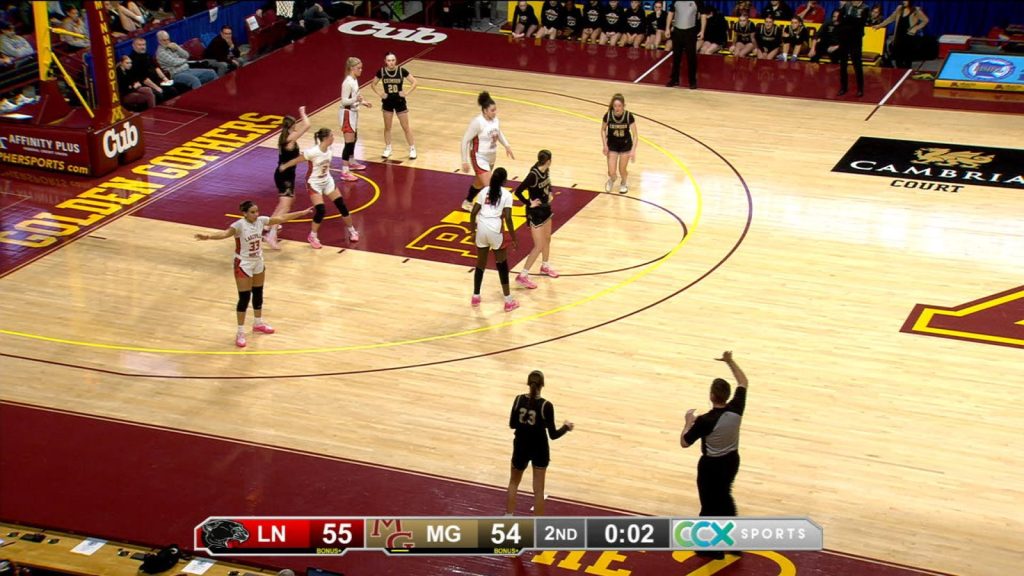
Claire and her teammates on the court for state basketball.
Everything Changes
After a year of hard training, Claire was briefly home in June. She was set to head back to school, until one night, while watching a movie, she became stiff. From her perspective, it seemed like she blacked out for a second. Sheila decided it was best to take her to the emergency room.
While waiting for care, Claire had more events in the waiting room. A nurse rushed out to check on what Sheila thought were seizures, but medical personnel said they were cardiac events. The ER doctor said she had a few more events once she was in the hospital room.
“She was having heart attacks. And he goes, ‘I don’t know how to tell a D1 athlete that’s 19 years old.’ But he said: ‘Your blood work looks like you’re having heart attacks,'” Sheila recalled.
Claire was then moved to the hospital at the University of Minnesota, where they did testing to discover her heart was damaged. It was old scarring –something Claire sustained overtime. Her heart was also operating lower than it should’ve.
Doctors broke the news to Claire. Her basketball career was over.
That wasn’t easy news, but Claire said she’s glad they told it to her straight.
“Just not knowing what was going on was really hard to comprehend and deal with,” Claire said.
Claire said her NDSU coach flew down to visit during her hospital stay.
“I didn’t really know what was going to happen, knowing I couldn’t play basketball anymore,” Claire said. “And he was like: ‘It’s not even a question, you’re on the team. We want you at everything, as much as you can be at.'”
She said that sense of normalcy made a huge difference as she navigated all the other uncertainties.
Claire went about a month without answers, a time where she was supposed to be undergoing summer training. Eventually, a second round of genetic testing found what doctors were looking for: a PPA2 mutation.
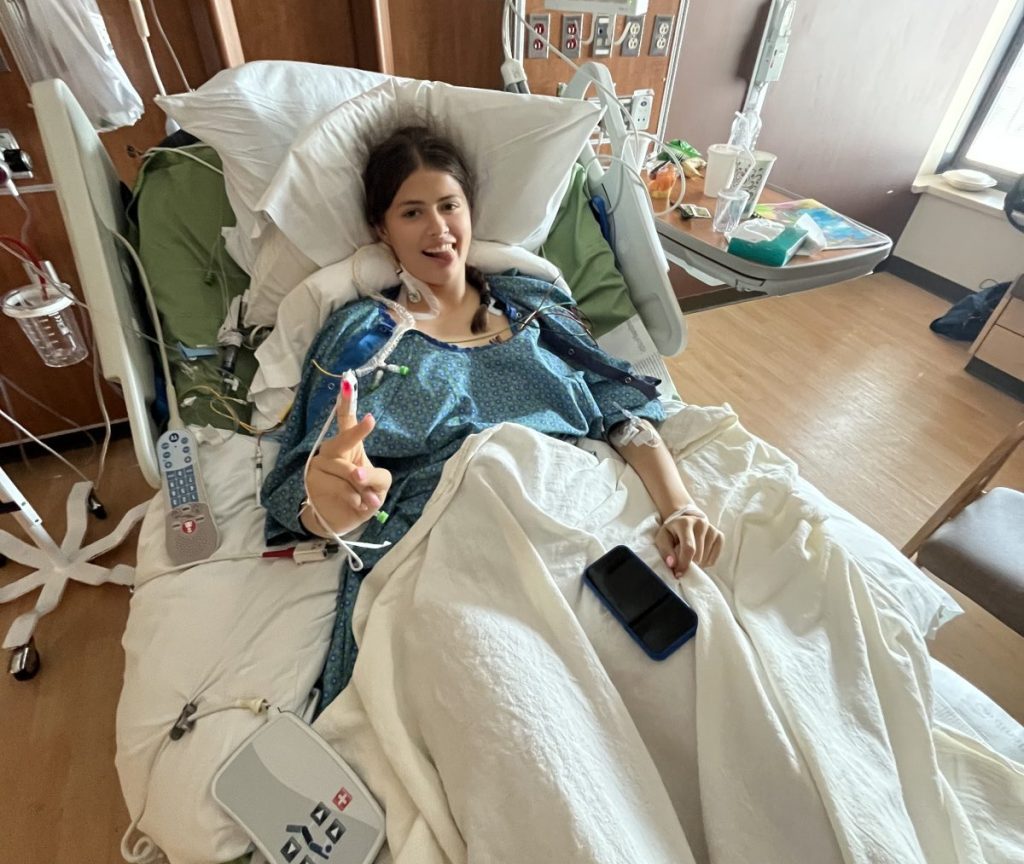
Claire in her hospital bed. She had to wait a month before receiving a diagnosis with expedited genetic testing.
RareDNA Foundation
PPA2 is a rare genetic defect — something Claire said her doctors had to look up. It affects the mitochondria, which transform nutrients into energy within cells. Both of Claire’s parents learned that they carry the mutation.
“They said that less than 60 people have been diagnosed with it,” Claire recalled. “At that time, they only knew a handful of people that were still alive with it. And normally with this mutation, they lose them as babies and they didn’t make it as far as I did.”
Retired from playing, Claire and her mom wanted to do something to raise awareness of those rare DNA mutations. Though she’s met a couple of people her age with the condition, Claire said there’s currently no uniform treatment plan. She wants to change that.
Claire and her family started the RareDNA Foundation with a number of fundraising events already under its belt. One event was held at a Maple Grove basketball game last week. She hopes the foundation can improve outcomes for families.
“So everyone can understand what’s going on, and also doctors and physicians — because they didn’t even know this was a thing until I was diagnosed with it,” Claire said.
A group of researchers at the University of Minnesota are willing to study Claire and her condition. They just need funding to do it.
“In the long run, that will be able to help a lot of people,” Claire said.
You can learn more about the RareDNA Foundation on its website. It takes donations through PayPal.
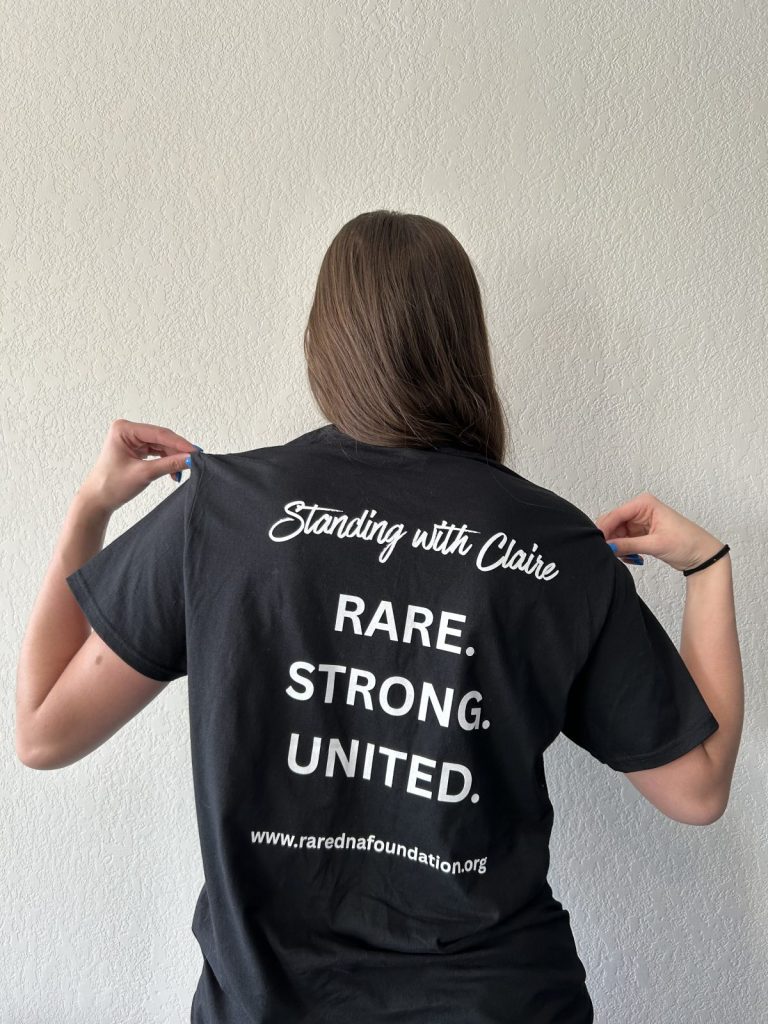
Claire models one of the shirts for RareDNA Foundation.