
Local Food Shelves Raise Concerns About Federal SNAP Cuts
Big changes are coming to the nation’s largest program to combat hunger.
The Supplemental Nutrition Assistance Program (SNAP), commonly known as food stamps, was the subject of a huge budget cut in the Big Beautiful Bill Act.
About $186 billion will be cut from SNAP through 2034.
That’s got some local nonprofit leaders concerned about the future.
“SNAP is kind of the backbone, right? It is our safety net,” said Sophia Lenarz-Coy, executive director of The Food Group. “Food shelves are designed to kind of be the safety net to that safety net. And I think we’re all bracing for having to make really hard choices.”
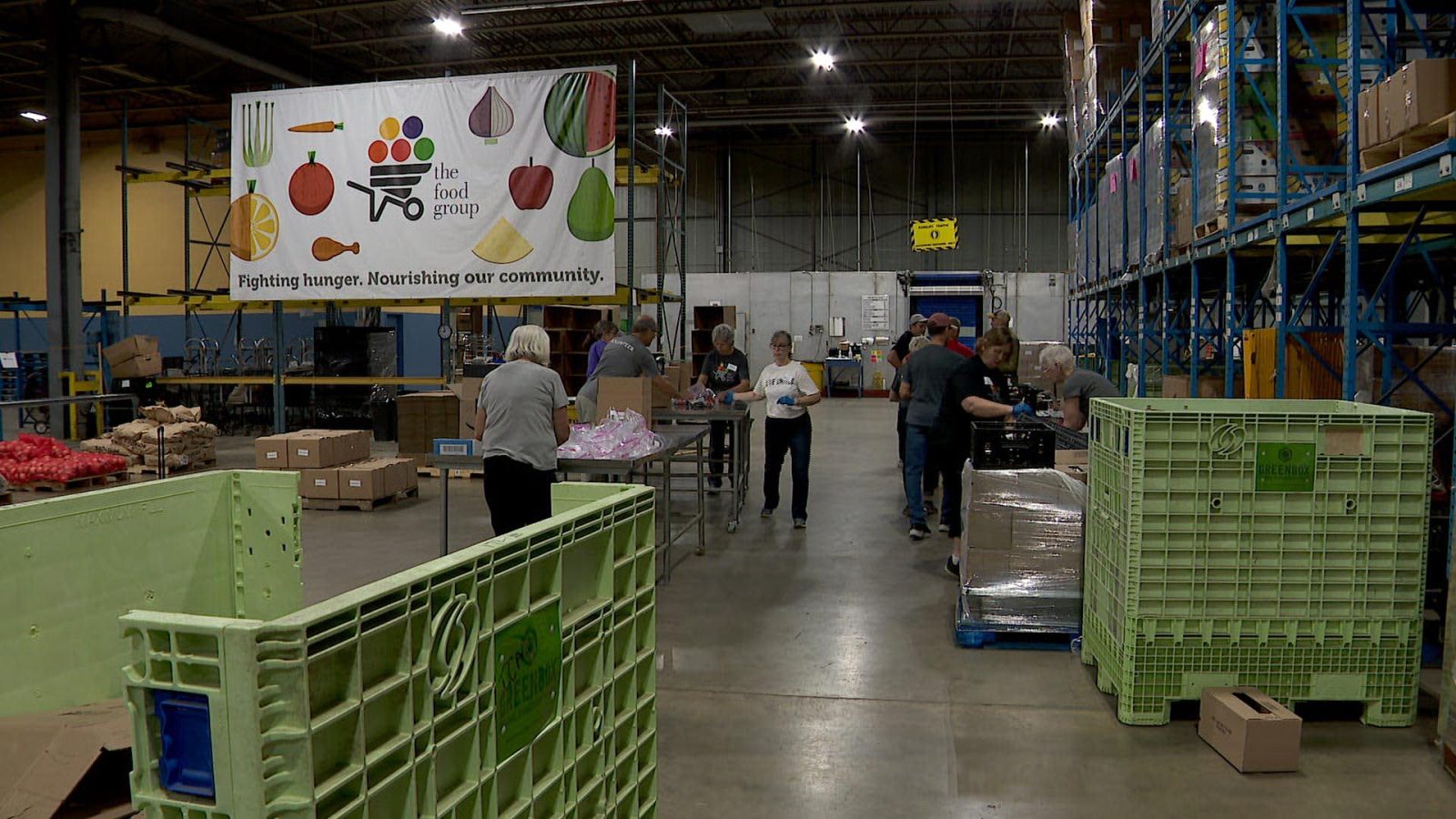
At The Food Group in New Hope, volunteers load groceries into boxes. Sophia Lenarz-Coy, executive director of The Food Group, spoke with a state Senate committee that’s studying the financial impact of federal policy on Minnesota.
Lenarz-Coy recently spoke to a new state Senate committee that’s studying the financial impact of federal policy on Minnesota.
The Food Group, which has a warehouse in New Hope, expects to see increased demand from an emergency hunger relief system that’s already strained.
Likewise, representatives from PRISM Food Shelf in Golden Valley said the rising costs of food add to concerns about the cuts.
“Chicken prices are up 25 percent from last year, peanut butter 11 percent, and eggs are increasingly difficult to source,” said Michelle Ness, executive director of PRISM. “Sticker shock is felt by food shelves, just like you and me.”
The Congressional Budget Office estimates that more than two million Americans could lose SNAP benefits each month due to the new work requirements in the Big Beautiful Bill.