
How To Curb Domestic Violence? Nonprofit Puts Focus on Men in ‘Bold Voices’ Campaign
Maria’s Voice, a nonprofit founded after a family lost its daughter to domestic violence in Maple Grove, strives to educate more people on the signs of violence.
Its latest campaign focuses on men.
“Most of the public doesn’t know the signs of domestic violence. So, when we founded Maria’s Voice — that was our mission. How do we educate people about the common signs of domestic abuse?” said Lissa Weimelt said.
Weimelt’s daughter, Maria Pew, was killed in 2020 in an act of domestic violence.
At the time, Weimelt and Maria’s dad, Bill Pew, didn’t see the warning signs. They founded Maria’s Voice to make sure others would know what to look for.
“We’ve really done a lot of work to bring education and awareness to our community,” Weimelt said.
Maria’s Voice has educated thousands on domestic abuse through public events and campaigns throughout the region.
According to the nonprofit, 1 in 3 women and 1 in 4 men experience intimate partner violence in their lifetime.
The group holds an annual community tribute in Maple Grove each fall to honor Minnesotans lost to domestic violence. This year, it will be hosted on Oct. 9 at Phenow Pavilion in Central Park. More details are posted on the Maria’s Voice website.
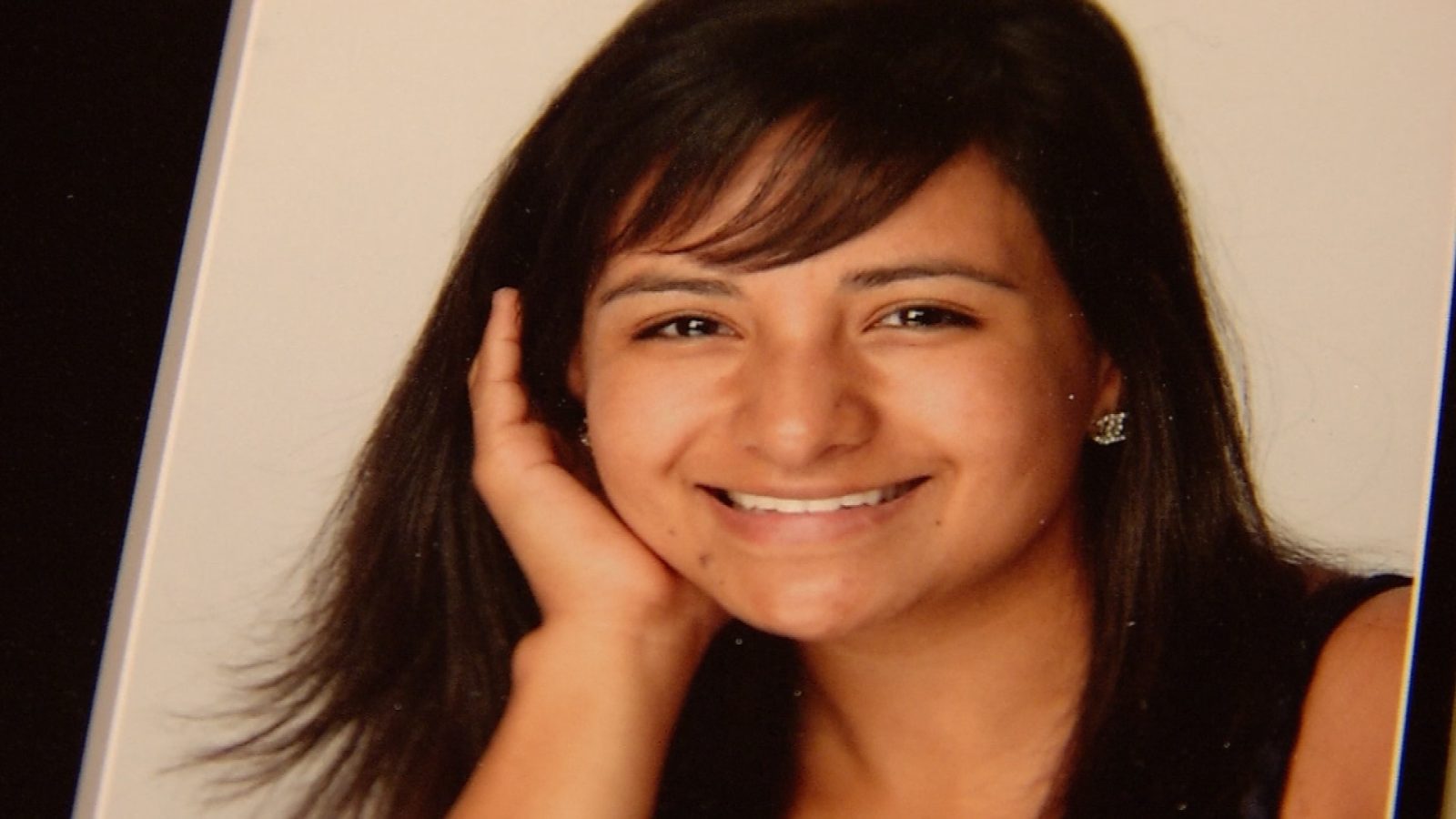
Maria’s Voice was founded in honor of Maria Pew, who was killed in an act of domestic violence.
Helping a Friend: The ‘Bold Voices’ Campaign
In one of Maria’s Voice’s newest campaigns, its zeroing in on a key group: men.
The campaign, called “Bold Voices,” is made up of seven videos featuring men talking about abusive language and how their peers can combat it.
“We give guys the words to safely talk to their friends, and we also give guys, through Bold Voices, the words to help a friend,” Weimelt said.
This program puts preventative language at the forefront.
Weimelt said that historically, men are more often the perpetrators of abuse, but many good men are out there, they just need to speak up.
The nonprofit enlisted everyday men for the videos, offering words for people who may not have them.
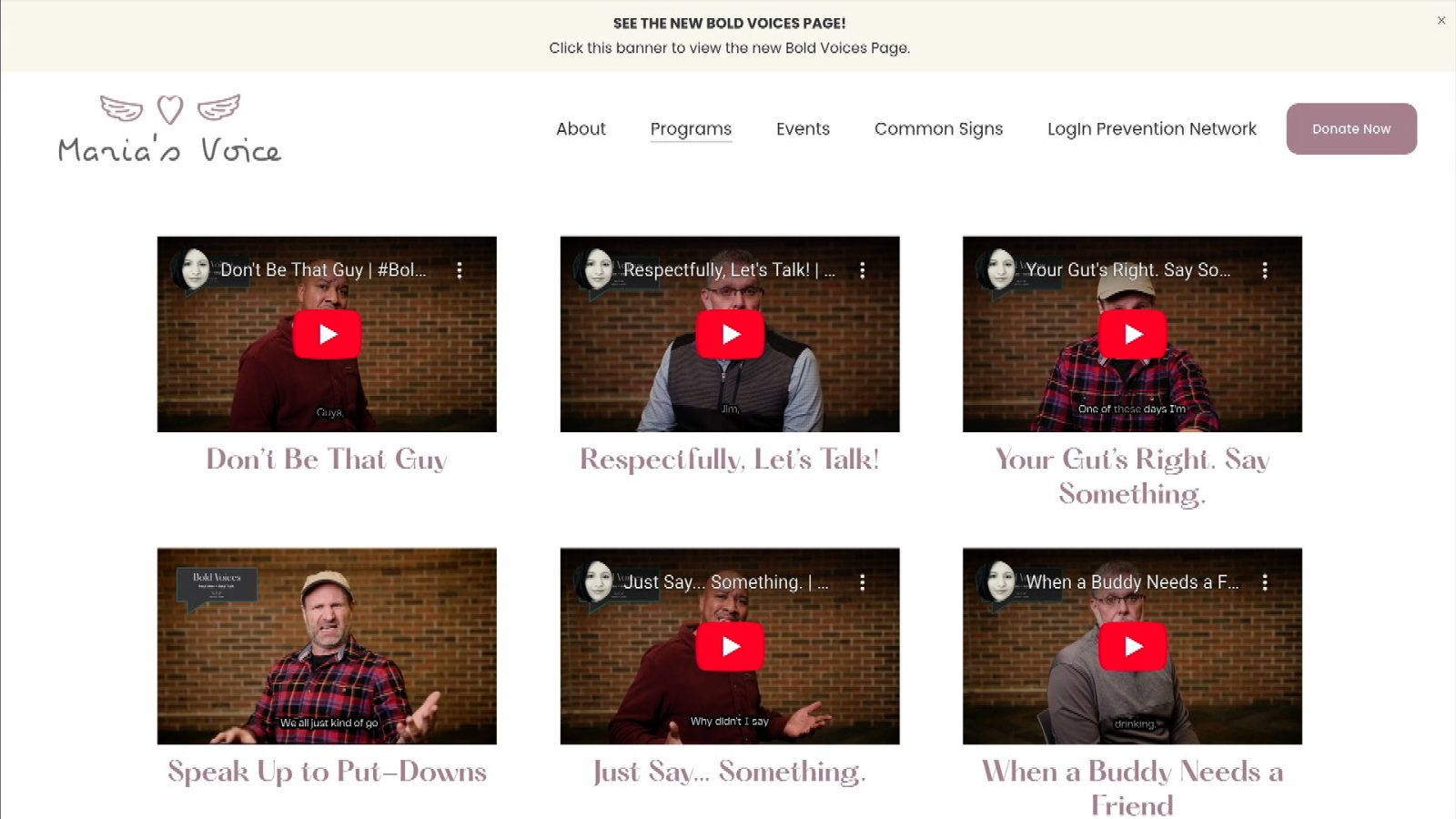
The Bold Voices campaign features men talking about different scenarios where they could’ve spoken up to their peers.
A Look at the Videos
One short video explores comments a man heard in the gym locker room. The narrator reflects and says: “I felt bad because I should’ve said something like: ‘fellas, what are you guys talking about? That’s not okay. That’s not cool. That girl could’ve been my daughter, or your sister, or a friend. Guys, don’t be that guy who takes advantage of drunk girls. You know that’s not right.'”
Another video offers about a man who speaks disrespectfully about and to his wife. The narrator considers what he will say next time: “I’m gonna pull him aside, and I’m gonna say: ‘talking like that offends me. Why are you so mean to her? She doesn’t deserve that. Please, stop treating her like that.'”
Both of those videos, along with the five others posted on the website, explore different things men can say when their peers show signs of domestic violence.
The narrator of the second video is Paul Economon, an area actor who feels strongly about the nonprofit’s mission.
“If a friend could approach you, and tell you that what you are doing doesn’t seem right, maybe you would listen to that. Hopefully you would. And I think that they would, I think men would,” Economon said.
He said he hopes his videos make a difference, too.
“That’s the goal, I think. It takes a community,” Economon said.